
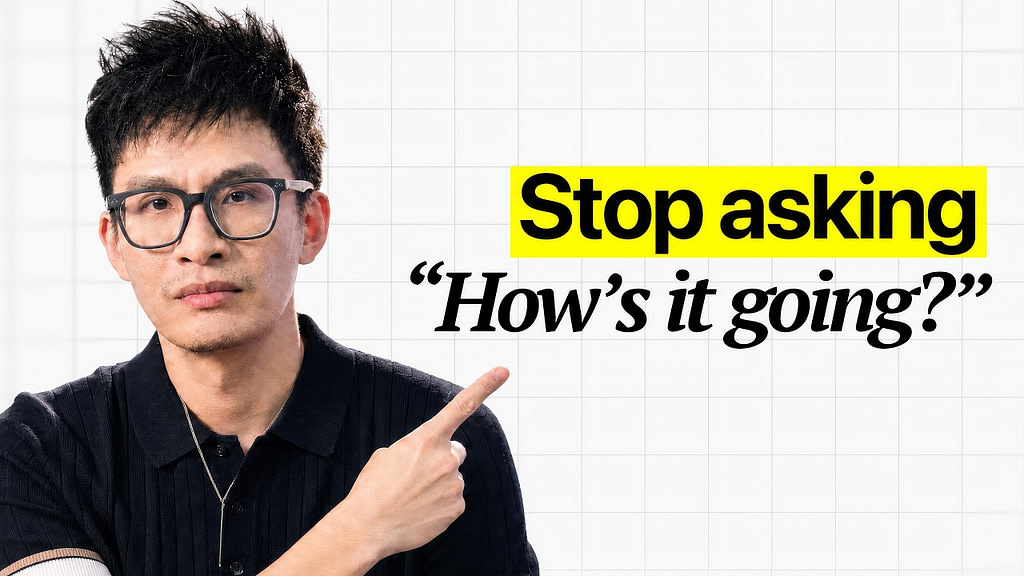
5 Speaking Habits That Make You Sound Weak
Every professional should watch the full breakdown to hear the jarring difference between sounding weak and sounding powerful.
Watch the full breakdown in the video below:
Source: Vinh Giang
Speaking Habits: Uptalk and Lack of Conviction
Ending your sentences on a high pitch makes statements sound like questions. This one small shift completely changes how people perceive your expertise.
- This pattern is called uptalk and it signals to everyone in the room that you’re looking for approval rather than leading the conversation. High status communicators do the opposite. They drop their pitch at the end of every statement to inject their words with certainty and authority. That one small shift completely changes how people perceive your expertise.
Speaking Habits: Word Salad and the PAT Framework
Dumping too many words into a conversation creates cognitive load for your listener and buries your actual point.
- High status speakers use the PAT framework to stay sharp when put on the spot. Pause to collect your thoughts. Ask a clarifying question to narrow the scope. Then introduce your answer with the phrase “the one thing.” That structure cuts nervous rambling instantly and delivers your message as a single powerful point.
Speaking Habits: Filler Words and Fear of Silence
Rushing to fill every gap with um or ah tells the room you’re uncomfortable with your own presence.
- Master communicators hold space. They use strategic pauses to give their next words more weight and let the silence do the work. Pairing that composure with steady eye contact builds an instant psychological connection with your listener.
- Hold someone’s gaze for the length of a single idea before moving on and you’ll immediately come across as more composed and credible.
Helpful Link From This Video
- FREE Communication Frameworks Training ➡ https://free.vinhgiang.com/hsc-framew…
Enjoyed this breakdown? Get the plot as it happens. Follow us on X, TikTok, and Instagram.
Disclaimer: This content is for informational and entertainment purposes only. The views expressed are personal opinions and do not constitute professional, medical, or financial advice.